
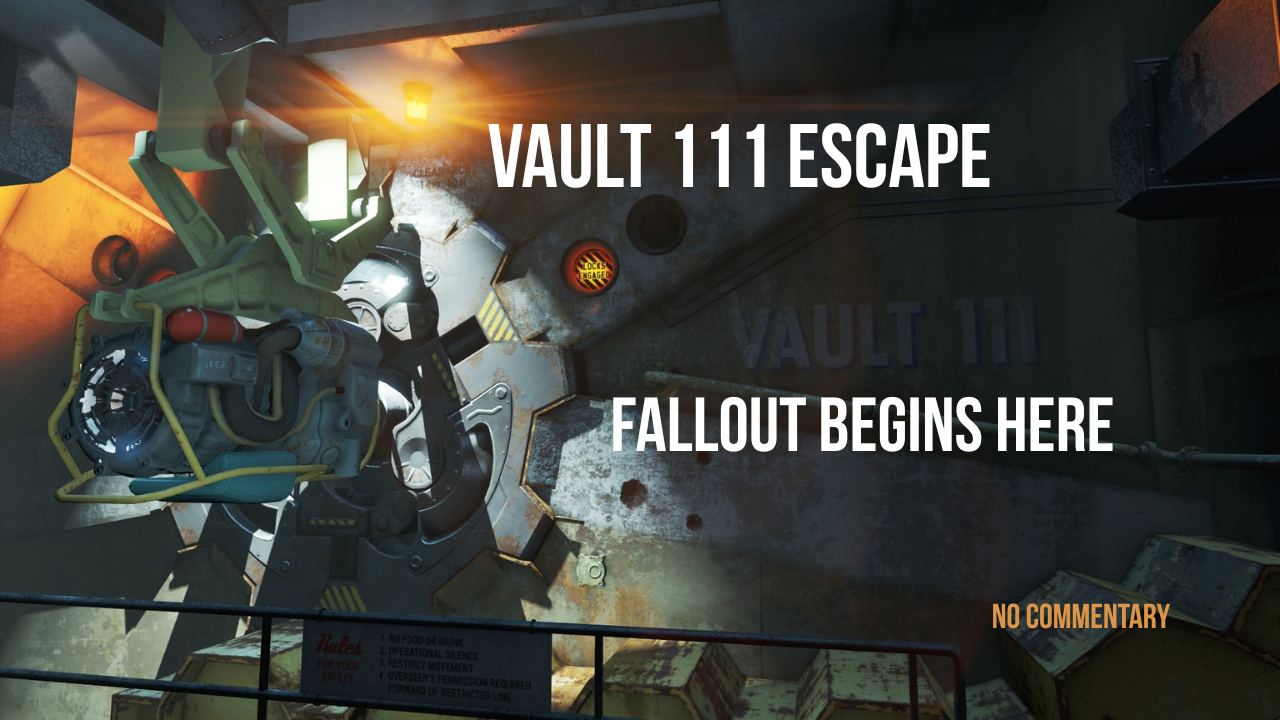
What Happened in Vault 111? The Complete Fallout 4 Story
Vault 111 is one of the most infamous locations in Fallout 4 and for good reason. What appeared to be a nuclear fallout shelter for the residents of Sanctuary Hills was actually a sinister cryogenic experiment conducted by Vault-Tec. The vault’s 33 residents, including the Sole Survivor and their family, were frozen in suspended animation for over 200 years without their knowledge or consent.
But Vault 111’s dark story doesn’t end with cryogenic sleep. The vault staff mutinied and died within months. The Institute broke in to kidnap Shaun, murdering the Sole Survivor’s spouse in the process. And when the Sole Survivor finally awakens in 2287, they’re the only living person left in a tomb of frozen corpses.
This is the complete story of Vault 111 from its construction as a Vault-Tec experiment to the events that made you the last survivor. If you’re coming from the Fallout TV show and want to understand Fallout 4’s opening, this guide explains everything.
- What Happened in Vault 111? The Complete Fallout 4 Story
- What Was Vault 111's Real Purpose?
- How Vault 111 Worked (The Experiment Design)
- What Happened on October 23, 2077 (The Day the Bombs Fell)
- The Staff Mutiny of 2078
- The Institute's Break-In (October 2227)
- Why the Sole Survivor Survived
- Exploring Vault 111: What You'll Find
- Vault 111's Connection to the Main Story
- Vault 111 in the Broader Fallout Universe
- Final Assessment
- Frequently Asked Questions About Vault 111
- Vault 111 and the Fallout TV Show: What You Need to Know
- Conclusion: The Legacy of Vault 111
- Sources and References
What Was Vault 111’s Real Purpose?
The Cryogenic Experiment
Officially, Vault 111 was a fallout shelter. Unofficially, it was a long-term cryogenic suspension trial. Vault-Tec wanted to see if they could preserve human biological assets indefinitely without their knowledge. This wasn’t a life-saving measure; it was a laboratory test where the humans were the “samples.”
Why Vault-Tec Chose Sanctuary Hills
Vault-Tec didn’t pick your neighborhood by accident. They needed a “genetically clean” control group. The residents of Sanctuary Hills were:
- Stable Demographics: Upper-middle-class families with high health standards.
- Compliant: Civilians who trusted authority figures during a crisis.
- Pre-War Purity: They had zero radiation markers, making them the ultimate “Gold Standard” for human DNA.
The Lie Told to Residents
The “Decontamination” procedure was the ultimate bait-and-switch. Residents were told the pods would scrub them of radiation before entering the main living quarters. Instead, the doors sealed, the temperature plummeted, and 210 years passed in a heartbeat.
How Vault 111 Worked (The Experiment Design)
The 180-Day Staff Protocol
The staff weren’t meant to stay forever. Their orders were to monitor the pods for 180 days and then wait for an “All-Clear” signal from Vault-Tec. The facility wasn’t even stocked with enough food for a full year.
Cryogenic Pod Technology
The pods were marvels of pre-war engineering. They induced rapid hypothermia to stop metabolic activity. However, they were entirely dependent on the Vault’s central power—if the power flickered, the “samples” died.
Who Knew the Truth?
Knowledge was strictly compartmentalized:
- The Overseer: Fully briefed on the experiment.
- Top Scientists: Knew about the stasis but perhaps not the lack of an exit plan.
- Security/Maintenance: Kept in the dark, told they were just “guarding a facility.”
What Happened on October 23, 2077 (The Day the Bombs Fell)
The Rush to Vault 111
The opening of Fallout 4 perfectly captures the “Panic and Compliance” model. Under the shadow of a mushroom cloud, the residents of Sanctuary Hills didn’t ask for a lawyer or a contract; they ran toward the only door that was open.
The “Decontamination” Deception
Once inside, the efficiency was brutal. Staff ushered residents into pods with the practiced tone of a doctor giving a routine physical. By the time anyone realized the “cleansing mist” was actually liquid nitrogen, they were already unconscious.
Entering Cryogenic Sleep
The transition was instantaneous. No dreams, no passage of time—just a fade to black that was meant to last six months but lasted two centuries.
The Staff Mutiny of 2078
Why the All-Clear Signal Never Came
When the 180-day mark passed in April 2078, the radio stayed silent. Vault-Tec HQ was gone, or perhaps they simply didn’t care about a small experiment in Massachusetts. Either way, the staff was corporate ghosted.
The Overseer’s Refusal to Open the Vault
As food supplies vanished, the Overseer became a zealot for the rules. He refused to open the door, citing radiation levels and “Experiment Integrity.” He was willing to let his staff starve to protect the frozen “samples.”
How the Security Team Killed the Overseer
The environmental storytelling in the Overseer’s office tells the tale: bullet casings, bloodstains, and a skeleton slumped at a desk. The security team staged a bloody coup, choosing survival over protocols.
The Fate of the Vault 111 Staff
Though the mutineers eventually opened the door, they likely walked out into a nightmare. In 2078, the Commonwealth was a radioactive hellscape. Without power armor or Rad-X, they likely died within days of their “freedom.”
The Institute’s Break-In (October 2227)
Why Conrad Kellogg Came to Vault 111
150 years into the future, the Institute found their “Backup Drive.” They needed uncorrupted DNA to build their Generation 3 Synths. Vault 111 was the only place left with “clean” humans.
The Murder of the Sole Survivor’s Spouse
Kellogg’s mission was clinical. When the spouse wouldn’t let go of the baby, Kellogg followed the Institute’s “minimal effort” policy: Remove the obstacle.
Why Shaun Was Kidnapped
Shaun wasn’t just a child; he was a biological blueprint. His DNA became the template for every Gen 3 Synth in the Commonwealth. He is, quite literally, the “Father” of the Synth race.
The Institute’s Shutdown of All Cryo-Pods
To save power and ensure no witnesses could follow them, the Institute remotely terminated the life support for the rest of the Vault. Everyone you ever knew in Sanctuary Hills died in their pods that day.
Why the Sole Survivor Survived
Father’s Decision to Reactivate One Pod
Shaun (now “Father”) eventually released you in 2287. He claims it was a “test” of your bond, but it was also a cruel psychological experiment—seeing if a man/woman out of time could survive in his world.
The 210-Year Sleep
You are the ultimate anomaly. While the world ended and rebuilt itself, you stayed exactly the same age. You are a living relic of a dead world.
Waking Up in 2287
The awakening is the true start of the game. You emerge into a world where your home is a ruin, your spouse is a memory, and your son is an old man.
Exploring Vault 111: What You’ll Find
| Item/Location | Significance |
| The Cryolator | A powerful freeze-ray locked in the Overseer’s office. |
| Overseer’s Terminal | Contains the logs of the mutiny and the experiment details. |
| Red Menace Holotape | A pre-war arcade game found in the recreation terminal. |
| Wedding Ring | Looted from your spouse’s pod; a grim reminder of your motivation. |
Vault 111’s Connection to the Main Story
How Vault 111 Connects to The Institute
Without Vault 111, the Institute would have never achieved true synthetic humanity. The Vault is the biological “womb” of the Institute’s power.
Why Finding Shaun Drives the Plot
The entire first half of the game is a “fish out of water” story driven by the trauma of Vault 111. The Vault provides the personal stakes that turn a survival game into a revenge thriller.
Vault 111 in the Broader Fallout Universe
How Vault 111 Compares to Other Vaults
Unlike Vault 11 (the sacrifice vault) or Vault 101 (the isolation vault), Vault 111 was purely technical. It wasn’t about social engineering; it was about human storage.
What the Fallout TV Show Teaches Us
The Amazon series reinforces the idea that Vault-Tec viewed the world as a “reset button.” Vault 111 was just one of many ways they planned to “save” their chosen assets—by turning them into frozen inventory.
Vault 111 vs. Vault 31 (TV Show Comparison)
Vault 31 (from the TV show) also uses cryogenics, but with a different goal: preserving management. Vault 111 preserved civilians as lab rats. In Vault 31, the frozen people were the masters; in Vault 111, they were the product.
Final Assessment
Vault 111 is a cold, dark testament to Vault-Tec’s ultimate philosophy: Everything is expendable. It succeeded in its technological goal but failed every human being inside its walls.
Frequently Asked Questions About Vault 111
Was Vault 111 a real shelter or an experiment?
No. Vault 111 was never a genuine fallout shelter despite what residents were told. It was a Vault-Tec experiment designed to test long-term cryogenic suspension on unknowing human subjects.
According to the Overseer’s terminal, Vault 111 was built to study “the long-term effects of suspended animation on unaware human subjects.” Residents of Sanctuary Hills and Concord believed they were entering a standard nuclear shelter when the bombs fell on October 23, 2077.
The “decontamination pods” were actually cryogenic stasis chambers. The vault staff consisting of an Overseer, scientists, and security guards were assigned to monitor the frozen residents for 180 days before evacuating. None of the 33 residents consented to or knew about the experiment.
Vault-Tec used Vault 111 as a post-war research project rather than a true survival shelter.
Why did the Institute kidnap Shaun from Vault 111?
The Institute kidnapped Shaun because they needed pure, pre-war DNA to create Generation 3 Synths synthetic humans indistinguishable from real people.
In 2227, Conrad Kellogg entered Vault 111 to retrieve an uncontaminated human subject. When he opened the Sole Survivor’s cryo-pod, he killed the surviving spouse (Nate or Nora) and kidnapped baby Shaun.
Infants have undamaged and malleable DNA, making Shaun the ideal genetic template. After 200 years of radiation exposure, Commonwealth DNA had become heavily mutated. Shaun’s pre-war genetics allowed the Institute to perfect its advanced Synth program.
The Institute then shut down life support for the remaining residents, killing 32 frozen individuals and leaving only the Sole Survivor alive.
How long was the Sole Survivor frozen in Vault 111?
The Sole Survivor was frozen for approximately 210 years, from October 23, 2077 to October 23, 2287.
Timeline breakdown:
- 2077: Entered cryogenic sleep as the bombs fell
- 2227: Briefly awakened during Shaun’s kidnapping, then re-frozen
- 2287: Released permanently by Father
Many players overlook that brief awakening during the kidnapping. That traumatic moment watching your spouse murdered and your child taken is the only memory between 2077 and 2287.
The 210-year time gap explains why the Commonwealth is a devastated wasteland and why Shaun is now an elderly man leading the Institute.
What happened to the Vault 111 staff?
The Vault 111 staff died in a violent mutiny roughly 180–200 days after the bombs fell in 2077.
After the mandatory 180-day observation period, the staff expected an all-clear signal from Vault-Tec headquarters. It never arrived. Food and water supplies ran low, and the Overseer refused to open the vault door.
Security and maintenance personnel mutinied. The Overseer was shot at his desk, and the vault door was eventually opened.
However, the staff likely died soon after from extreme radiation exposure on the surface. No records of Vault 111 survivors exist anywhere in the Commonwealth.
Why did Father release the Sole Survivor?
Father released the Sole Survivor as both a scientific and personal experiment.
As Director of the Institute and dying of cancer, he wanted to test whether pre-war emotional bonds could survive 200 years of separation. Would his biological parent still feel love? Would pre-war morality endure in a post-apocalyptic world?
His motivations included:
- Psychological experimentation
- Personal curiosity
- Potential recruitment into the Institute
He deliberately chose October 23, 2287 exactly 210 years after the bombs fell to release the Sole Survivor.
Can you return to Vault 111 after leaving?
Yes. Vault 111 remains accessible for the entire game.
To return, press the button in the guard tower outside the vault entrance. The elevator will take you back down.
Reasons to return include:
- Retrieving the Cryolator
- Collecting missed jumpsuits
- Reading terminal logs
- Bringing companions for unique dialogue
Enemies and loot do not respawn, and you cannot respec your character again. The vault door remains permanently open after your first exit.
Where is Vault 111 located on the map?
Vault 111 is located in the northwest region of the Fallout 4 map.
It sits:
- Northwest of Sanctuary Hills
- Near Concord, Massachusetts
- Northeast of Red Rocket Truck Stop
The entrance is built into a hillside overlooking Sanctuary Hills. After exiting for the first time, Vault 111 becomes a permanent fast travel location.
How many people were in Vault 111?
Vault 111 contained approximately 33 cryogenically frozen residents and around 10–15 staff members.
Resident breakdown:
- Multiple cryo-pod chambers
- Roughly 15–18 pods per room
- Only one survivor: the Sole Survivor
Staff included:
- 1 Overseer
- 3–5 Scientists
- 4–6 Security guards
- 2–3 Maintenance workers
All residents except the Sole Survivor died when life support was cut in 2227.
What is the Cryolator and how do you get it?
The Cryolator is a unique freezing weapon stored in a Master-locked case in the Overseer’s office inside Vault 111.
To obtain it early:
- Bring Dogmeat as your companion
- Command him to fetch items in the room
- He can retrieve the Cryolator without unlocking the case
To obtain it legitimately:
- Reach Master lockpicking (Locksmith Rank 4)
- Pick the case
The Cryolator fires cryogenic blasts that freeze enemies solid, allowing them to shatter. It is extremely powerful in the early game.
How does Vault 111 compare to Vault 4 from the TV show?
Vault 111 and Vault 4 both involve deception and experimentation but differ significantly in outcome.
Vault 111:
- Cryogenic suspension experiment
- Residents remained unconscious
- 32 killed by Institute shutdown
Vault 4 (TV series):
- Genetic experimentation
- Residents rebelled against experimenters
- Vault community survived
The major difference is agency. Vault 4 residents fought back and rebuilt. Vault 111 residents never had the opportunity.
What does the Vault 111 jumpsuit do?
The Vault 111 jumpsuit grants:
- +1 Agility
- +1 Perception
It provides no damage resistance but offers minor early-game stat bonuses.
You can find jumpsuits in:
- The cryo-pod room
- Near the vault entrance bridge
- Your starting inventory
Many players keep one for nostalgia or roleplay purposes, even after upgrading to better armor.
Is Vault 111 based on a real place?
Vault 111 itself is fictional, but its cryogenic concept was inspired by real-world research at MIT (Massachusetts Institute of Technology).
Fallout 4 developer Emil Pagliarulo visited MIT’s cryogenics laboratory during development, which influenced the vault’s suspended animation premise.
While the in-game location is fictional, Massachusetts has real cryonics research facilities. Companies like Alcor offer cryogenic preservation services today—though with full consent, unlike Vault-Tec’s secret experiment.
Vault 111 and the Fallout TV Show: What You Need to Know
If you’re discovering Fallout 4 after watching the Fallout on Amazon Prime Video, you already understand one crucial truth: Vault-Tec lies.
The TV series makes it explicit that every vault was designed as a controlled social or scientific experiment rather than a genuine long-term shelter. Vaults 31, 32, and 33 demonstrate this clearly, presenting a hopeful “reclamation” narrative while hiding a generational corporate agenda. Vault 111 follows the exact same structural deception.
Here’s what the show teaches you about Vault 111:
- Vault-Tec never prioritized saving humanity
- Every vault had a concealed experimental purpose (Vault 111 = cryogenic testing)
- Residents were research subjects, not protected citizens
- Vaults functioned as long-term data collection systems
If Lucy MacLean’s discovery of Vault-Tec’s manipulation shocked you, Vault 111’s backstory will feel disturbingly familiar.
Vault Experiments: TV Show vs Fallout 4
Below is a direct structural comparison between the show’s vaults and Vault 111:
| Element | Vault 31/32/33 (TV Show) | Vault 111 (Fallout 4) |
| Official Purpose | Reclamation preparation | Nuclear fallout shelter |
| Real Purpose | Breed and preserve Vault-Tec executives across generations | Test long-term cryogenic suspension |
| Residents Knew? | No | No |
| Vault-Tec Staff | Bud and executives preserved in cryo (Vault 31) | Overseer + scientists (killed in mutiny) |
| Experiment Type | Social engineering (breeding program) | Medical/scientific (cryogenics) |
| Outcome | Internal vault conflict; Lucy escapes | 32 residents killed; 1 survivor |
| Timeline | Active in 2296 | Abandoned after 2287 awakening |
| Connection to Plot | Reveals Vault-Tec’s master plan | Establishes Sole Survivor’s origin |
The structural pattern is identical: deception, experimentation, and corporate self-interest disguised as salvation.
What Vault 4 Teaches About Vault 111
Vault 4 in the TV series is the closest thematic parallel to Vault 111.
VAULT 4 (TV Series):
- Experiment: Human-animal genetic splicing
- Staff: Conducted unethical experiments on residents
- Residents: Eventually rebelled
- Outcome: Established a functioning post-rebellion community
- Visual parallels: Cryo pods, mutated survivors, evidence of experimentation
VAULT 111 (Fallout 4):
- Experiment: Long-term cryogenic suspension
- Staff: Monitored frozen subjects
- Residents: Never conscious long enough to resist
- Outcome: Entire population dead except one survivor
- Environmental storytelling: Cryo pods, skeletal remains, terminal logs
The key distinction is agency. Vault 4 residents woke up and fought back. Vault 111 residents remained unconscious for 150 years, leaving their fate to outside forces like the Institute.
Lucy MacLean’s arc from naïve vault dweller to hardened wasteland survivor mirrors the Sole Survivor’s transformation. Both begin with institutional trust. Both discover betrayal.
Why Fallout 4 Players Love the TV Show (And Vice Versa)
If you’re coming from the TV show:
- Fallout 4 expands vault experimentation lore in greater depth
- You experience Vault-Tec’s deception firsthand
- The Institute operates with the same moral logic as Vault-Tec: scientific progress without ethical limits
- Vault 111’s opening sequence mirrors Lucy’s realization authority figures lied
If you’re coming from Fallout 4:
- The TV series visualizes Vault-Tec’s long-term corporate agenda
- Bud’s cryo preservation echoes Vault 111’s suspended animation chambers
- The Brotherhood of Steel receives expanded narrative treatment
- The series respects established canon and timeline continuity
Suggested Viewing Order:
- New to Fallout? Watch the TV show → Play Fallout 4 → Rewatch for deeper context
- Fallout 4 veteran? The show functions as expanded universe canon
- Want maximum narrative depth? Fallout 4 → TV Series → Fallout: New Vegas
Season 2 Connections to Fallout 4
Season 2 of the Fallout shifts focus toward New Vegas while maintaining connective tissue to the broader franchise timeline.
Established Timeline Context:
- Series setting: 2296
- Fallout 4 setting: 2287
- Gap: 9 years after the Sole Survivor exits Vault 111
Continuing Threads:
- Brotherhood of Steel expansion
- Deeper exploration of Vault-Tec’s master strategy
- Potential Enclave references (a major background faction in Fallout lore)
While Season 2 centers geographically elsewhere, the implications of Fallout 4 still matter:
- Institute synth technology could influence broader wasteland politics
- Vault-Tec’s cryogenic successes (like Vault 111) may exist in internal corporate archives
- The Sole Survivor’s choices in the Commonwealth logically shape the 2296 world state
The showrunners have confirmed the series exists within official game canon. That means Vault 111, the Institute, and the Sole Survivor’s journey are part of the same unified timeline.
Conclusion: The Legacy of Vault 111
Vault 111 represents the core themes of Fallout: corporate deception, human experimentation, and the moral cost of scientific progress. The Sole Survivor’s journey begins as a victim of Vault-Tec’s hubris and ends as the final variable in Father’s twisted experiment.
Every tragedy in Vault 111, from the staff mutiny to the Institute’s massacre, reveals a world where humanity’s greatest advancements are also its darkest sins.
Sources and References
- Vault 111 terminal entries (Overseer / cryogenic array / security logs). (Fallout Wiki)
- Conrad Kellogg dialogue and script excerpts. (The Vault)
- Shaun (biography and kidnapping timeline). (Fallout Wiki)
- Vault 111 canonical summary (Fallout wiki / fandom). (Fallout Wiki)