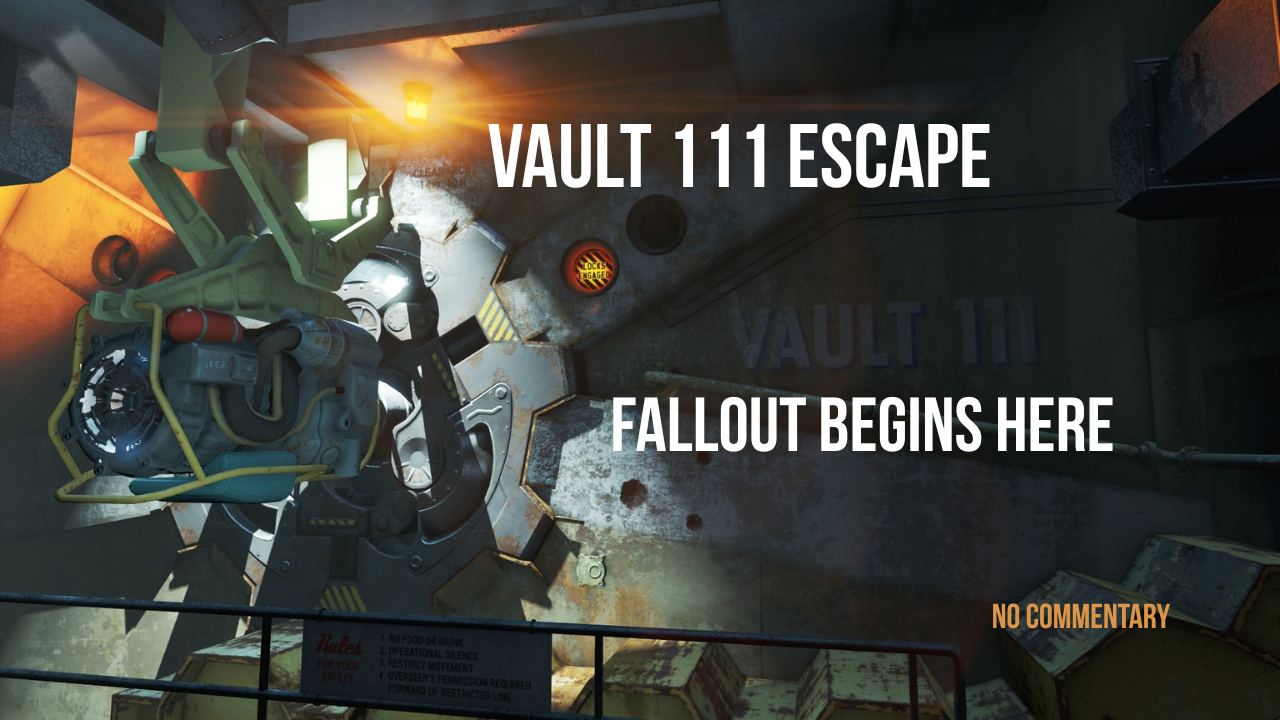
Vault 111: What They Really Did to the Residents of Sanctuary Hills
Quick Answer: Vault 111 explained, what happened in Vault 111 and what was its purpose? Residents were told it was a standard fallout shelter. It was actually a Vault-Tec experiment to test long-term cryogenic suspension on unaware human subjects, run by a skeleton staff who were themselves told almost nothing, and whose own internal rules permitted up to 80% of the frozen population to die before anyone was allowed to intervene. This is the first case file in an ongoing investigation into what Vault-Tec’s vaults were really built for, and who was really watching.
This is Episode 1 of The Vault-Tec Files, a series examining what each Vault-Tec vault was actually designed to do beneath its cover story, and building the case that the vaults themselves were never the real experiment. Future entries will cover Vault 101, Vault 87, Vault 13, Vault 76, the Vault 31/32/33 complex from the Fallout TV series, and eventually the Enclave sites and operations tying all of it together.
We’re starting with Vault 111, because it’s one of the cleanest, most fully documented cases Vault-Tec ever ran, and because the discrepancies in its own records raise a question this series will keep coming back to: if Vault-Tec’s official documentation doesn’t even agree with itself, what else isn’t being told straight?
The Cover Story
Residents of Sanctuary Hills and Concord, Massachusetts were told Vault 111 was a standard nuclear fallout shelter. Vault-Tec ran a “Welcome Home” promotion advertising open enrollment, and a pre-war newscaster confirmed openings were still available in Vault 111 right up until the bombs fell on October 23, 2077.
Residents who reserved a spot believed they were securing a place in a decontamination shelter, get inside, waited out the radiation, and came back up once it was safe. That’s what the advertising promised. That’s what the “decontamination pods” were supposed to be.
None of it was true.
What Was Actually Happening
Vault 111 wasn’t built to shelter anyone. It was built to test how long unaware human subjects could survive in cryogenic stasis, and to do it without the subjects ever knowing they’d been experimented on at all.
The vault’s own overseer’s terminal states the purpose in writing, no euphemism, no cover language:
“Vault 111 is designed to test the long-term effects of suspended animation on unaware, human subjects.”
The “decontamination pods” residents were led into were cryogenic chambers. The moment residents stepped inside, they were frozen, not sheltered, not decontaminated. Frozen, as test subjects, without consent, without disclosure, and without ever being told what they had actually walked into.
Vault-Tec assigned the vault only a skeleton crew: an overseer, a handful of researchers, and a small security detail, all on short-term assignment. Their job wasn’t to manage a community of survivors. It was to monitor cardiopulmonary and cognitive activity in frozen bodies for 180 days, then evacuate and let Vault-Tec take over remote monitoring from somewhere else entirely.
The Staff Didn’t Get the Full Story Either
This is the part most retellings of Vault 111 skip, and it’s one of the more unsettling pieces of evidence in the whole case file: the staff running the experiment weren’t fully briefed on what they were part of, either.
Internal logs show a security staffer wrestling with what they’d been told to do:
“I don’t get it. Eggheads tried to explain to me that keeping them frozen is a big experiment. For a better future or something. I don’t know. It just doesn’t seem right that we were smiling at them all that time before putting them on ice. Shouldn’t we have told them something?”
Months later, the same log shows growing suspicion that even the staff were being kept in the dark by someone above them:
“None of the scientists came. Overseer wasn’t there either. I just don’t get them. They hiding something from us? Another company secret only for the higher ups?”
Vault-Tec didn’t just deceive the residents. The chain of secrecy went at least one layer deeper than the people actually running the vault, which raises the obvious question this series will keep circling back to: if the on-site staff weren’t trusted with the full picture, who was actually getting the real data, and where did it go?
The Rules Prove It Wasn’t an Accident
The strongest evidence that Vault 111 was a deliberate experiment, not a shelter that happened to go wrong, comes from the vault’s own written operating procedures. These aren’t ambiguous. They’re explicit.
Staff were told their assignment was short-term, and that “long-term monitoring will be handled remotely by Vault-Tec technicians.” The experiment was always meant to outlast the people running it on-site.
Under no circumstance was suspension to be disrupted, and that included a direct, written prohibition on life-saving intervention:
“Life-saving intervention is only permitted if greater than 80% of the resident population has perished while in cryogenic suspension, and must not interrupt suspension.”
Read that again: up to 80% of the people frozen inside Vault 111 were allowed to die before staff were even permitted to consider stepping in, and even then, the rule explicitly forbids interrupting the suspension process itself while doing it. This isn’t negligence. It’s a written policy that prioritized the integrity of the experiment over the lives of the subjects in it, by design.
And in case any of the actual staff thought their own lives mattered more than the data: the same procedures classified vault personnel as expendable, and identified unused cryogenic pods as “the preferred method for cadaver disposal.” The staff weren’t just running the experiment. They were inside the same machine as the residents, just with slightly more information and slightly worse job security.
The Mutiny
As the 180-day mark approached with no evacuation order and dwindling supplies, the security staff’s patience ran out. The overseer, increasingly aloof, disabled the vault’s primary entrance door and posted a researcher outside his own office to limit security’s access, a clear sign he knew exactly how this was going to go if his people found out how little control any of them actually had.
It didn’t matter. Security eventually circumvented the lock, killed the overseer and the remaining researchers, and left the vault. No one came back. No further entries were ever logged on the security terminal or the overseer’s terminal after that point. Whatever Vault-Tec’s remote monitoring picked up after the staff abandoned the vault, the on-site record simply stops.
That silence is the last thing the vault’s human staff ever recorded. Everything after this point belongs to the frozen residents alone, and to whoever, somewhere else, kept watching.
A Discrepancy in Vault-Tec’s Own Records
Here’s where Vault 111 gets stranger, and where this case file leaves a thread open rather than closing it.
There’s an empty cryo pod in the same chamber where the Sole Survivor’s family was frozen, marked “Occupant Status: Not Applicable.” Every other pod in that chamber holds a body, residents who were already dead before the player ever reaches them.
But the overseer’s own terminal states that all enrolled residents made it into the vault before the bombs dropped.
Those two records can’t both be true. If every enrolled resident made it inside, why is there an officially empty, unassigned pod in the same room? Was someone removed from the manifest after the fact? Was a resident never actually frozen at all, despite the paperwork saying otherwise? Vault-Tec’s own documentation doesn’t resolve it, and neither does anything else found in the vault.
This is exactly the kind of inconsistency this series is built to track. Vault 111 isn’t an isolated weird detail. It’s the first data point in a pattern this investigation will keep finding: official Vault-Tec records that don’t add up, gaps left where an explanation should be, and a company that was never being straight with anyone, staff included.
What Vault 111 Tells Us So Far
Three things are established as fact, directly from Vault-Tec’s own internal documentation, not speculation:
Vault-Tec deceived residents about the basic nature of the shelter they were entering. The “decontamination pods” were cryogenic chambers, full stop.
Vault-Tec deceived its own staff about the scope of what they were part of, and built secrecy into the chain of command itself.
Vault-Tec wrote explicit policy prioritizing experimental integrity over human life, with a death threshold of 80% before intervention was even permitted.
What we don’t yet know is who Vault-Tec’s “remote monitoring” actually reported to once the on-site staff were gone, and why a vault built purely to study cryogenics needed a security mandate severe enough to authorize lethal force against its own administrators’ insubordinate staff. Those threads pick up in later entries in this series, including what we now know was happening at the company’s own operational sites the entire time.
Frequently Asked Questions
Was Vault 111 ever a real fallout shelter?
No. Despite Vault-Tec’s advertising and the “Welcome Home” promotion offered to residents, Vault 111 was designed exclusively to test long-term cryogenic suspension on unaware human subjects. The vault’s own overseer’s terminal states this directly as its design purpose.
Did the residents know they would be frozen?
No. Residents believed they were entering decontamination pods as part of a standard fallout shelter procedure. None of the source material indicates any resident was told they would be placed in cryogenic stasis rather than simply sheltered.
Did Vault-Tec staff know what they were doing?
Partially, and unevenly. Staff were briefed enough to carry out monitoring duties, but internal logs show security personnel growing confused and suspicious that scientists and the overseer were withholding the full purpose of the experiment from them as well.
Why didn’t staff intervene when residents started dying?
Vault 111’s written procedures explicitly forbade life-saving intervention unless more than 80 percent of the resident population had already died, and even then prohibited interrupting the cryogenic suspension process itself. This was written policy, not staff negligence.
What happened to the vault’s staff?
As the 180-day shelter period dragged on without an evacuation order, security personnel mutinied, killing the overseer and remaining researchers before abandoning the vault. No further logs were recorded by staff after that point.
What is the empty pod discrepancy?
One cryo pod in the same chamber as the Sole Survivor’s family is marked “Occupant Status: Not Applicable,” despite every other pod in that room holding a body and the overseer’s terminal claiming all enrolled residents made it into the vault. The discrepancy is never resolved in any in-game source.
Is Vault 111 connected to the Enclave?
Not directly confirmed within Vault 111 itself. This series will examine that connection in later entries, including what Vault-Tec’s own remote monitoring infrastructure suggests about who was actually receiving the data being collected.
Where can I read the source documents myself?
The Vault 111 overseer’s terminal, security terminal, and cryogenic array terminals are all explorable in-game and documented in detail on the Fallout Wiki, which is the primary sourcing used throughout this series.
Next in The Vault-Tec Files
Episode 2 examines Vault 31, 32, and 33, the complex featured in the Fallout TV series, and one of the clearest on-screen confirmations yet that the vault experiments were never isolated, unrelated incidents.
Sources and References
- Vault 111 terminal entries (Overseer / cryogenic array / security logs). (Fallout Wiki)